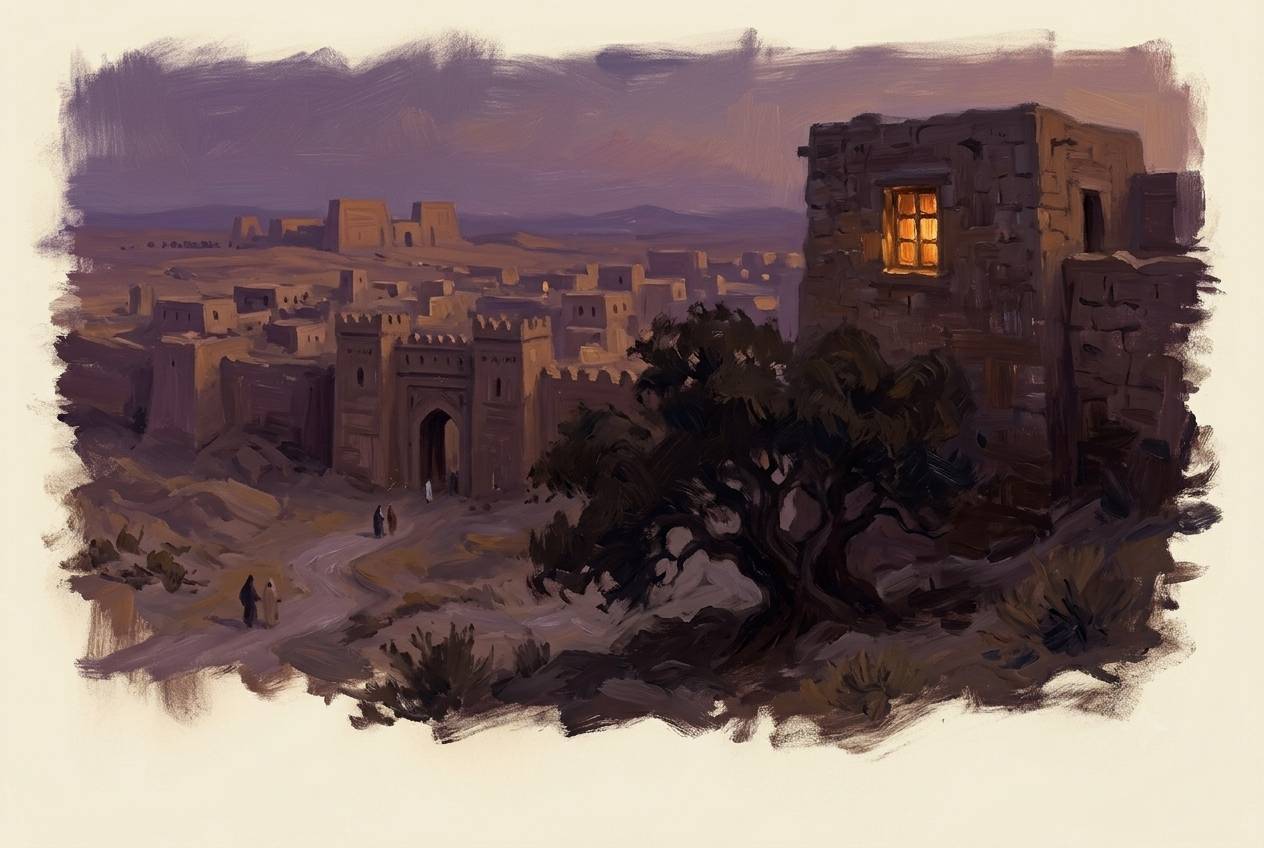
David and Absalom
A father’s grief, recorded without rebuke.
The story
David was a king, a warrior, the man God called “after my own heart.” But this story isn’t about his throne or his battles. It’s about his son.
Absalom was David’s third son — handsome, charismatic, the kind of person who walked into a room and changed it. He was also wounded. His sister Tamar had been assaulted by their half-brother Amnon, and David — for reasons the text leaves uncomfortably ambiguous — did nothing about it. Absalom waited two years and then killed Amnon himself. He fled. David eventually let him return, but their relationship was broken.
What followed was years of slow betrayal. Absalom positioned himself at the city gates, listening to people’s grievances and quietly turning their hearts against his father. “If only I were judge in this land,” he would say, “I would give you justice.” It was a coup played out in slow motion by the king’s own son.
When the rebellion finally came, David had to flee his own capital. His son was leading an army against him. In the battle that followed, David gave a single order to his commanders before they marched out: “be gentle with the young man Absalom for my sake.” His son was trying to kill him. He was still trying to protect his son.
Absalom was killed in the battle anyway, against David’s orders. When the messenger came with news of victory, David’s only question was about his son. When he heard Absalom was dead, he climbed to the room above the gate and wept — and the words he cried out are some of the rawest in all of Scripture: “O my son Absalom, my son, my son Absalom! Would I had died instead of you, O Absalom, my son, my son.”
He would have traded places. With the boy who had spent years plotting to kill him.
David’s grief here doesn’t get a tidy ending. The kingdom moves on. He keeps reigning. But the wound stays. And what makes this story precious for someone in deep relational pain is that Scripture records it — every cry, every regret, every layer of complicated grief — without rebuke. God didn’t tell David his feelings were wrong. He let David’s lament become part of the holy text. The agony of being deeply hurt by someone you couldn’t stop loving is recorded in the Bible because God knew people would need to know it belonged there.
David’s relationship with God survived this. Not because the pain went away — but because he kept bringing it. The Psalms are full of him crying out from exactly this kind of wound, and they remain prayers people pray today, three thousand years later. His grief became a language for the rest of us.
For you, reading this now
Maybe what hurts most isn’t even what they did — it’s that you still love them. You can be devastated by someone and still wish you could have saved them. David knew that exact agony. His own son Absalom spent years quietly turning the kingdom against him and finally led an army to kill him. And on the morning of the battle, David told his commanders one thing: be gentle with the young man. He was still trying to protect the son who was trying to destroy him. When Absalom was killed anyway, David climbed to a room above the gate and cried words that have echoed for three thousand years — “would I had died instead of you, my son.” He would have traded places. With the one who was trying to kill him. God didn’t rebuke David for that grief. He recorded it. Made it part of Scripture. Because someone, someday, was going to need to know that this exact kind of pain belongs there. If you’re hurting like this — caught between love and betrayal that won’t untangle — your grief is in good company. And the God who recorded David’s lament is not asking you to be tidier about yours.
This character speaks to people who feel…
Read it for yourself
The rebellion and the death: 2 Samuel 13-19 — the full arc of the family wound that consumed David’s reign.
A reading note: This is one of the hardest passages in the Bible. It includes assault (chapter 13), murder, betrayal, and ends in grief. Read it slowly, and not on a heavy day unless you’re ready.
Where to start, if you only have ten minutes: 2 Samuel 18:24-19:8 — the news arrives, David climbs to the room above the gate, and weeps the words that have echoed for three thousand years.
For going further — where the lament continues: David processed this kind of pain in poetry that became scripture. Read Psalm 3 (written during Absalom’s revolt, according to its title), Psalm 13 (“how long, O Lord?”), and Psalm 51 (his most famous prayer of brokenness, written about a different wound but speaking the same language).