Joseph
Betrayed by family, kept walking anyway.
The story
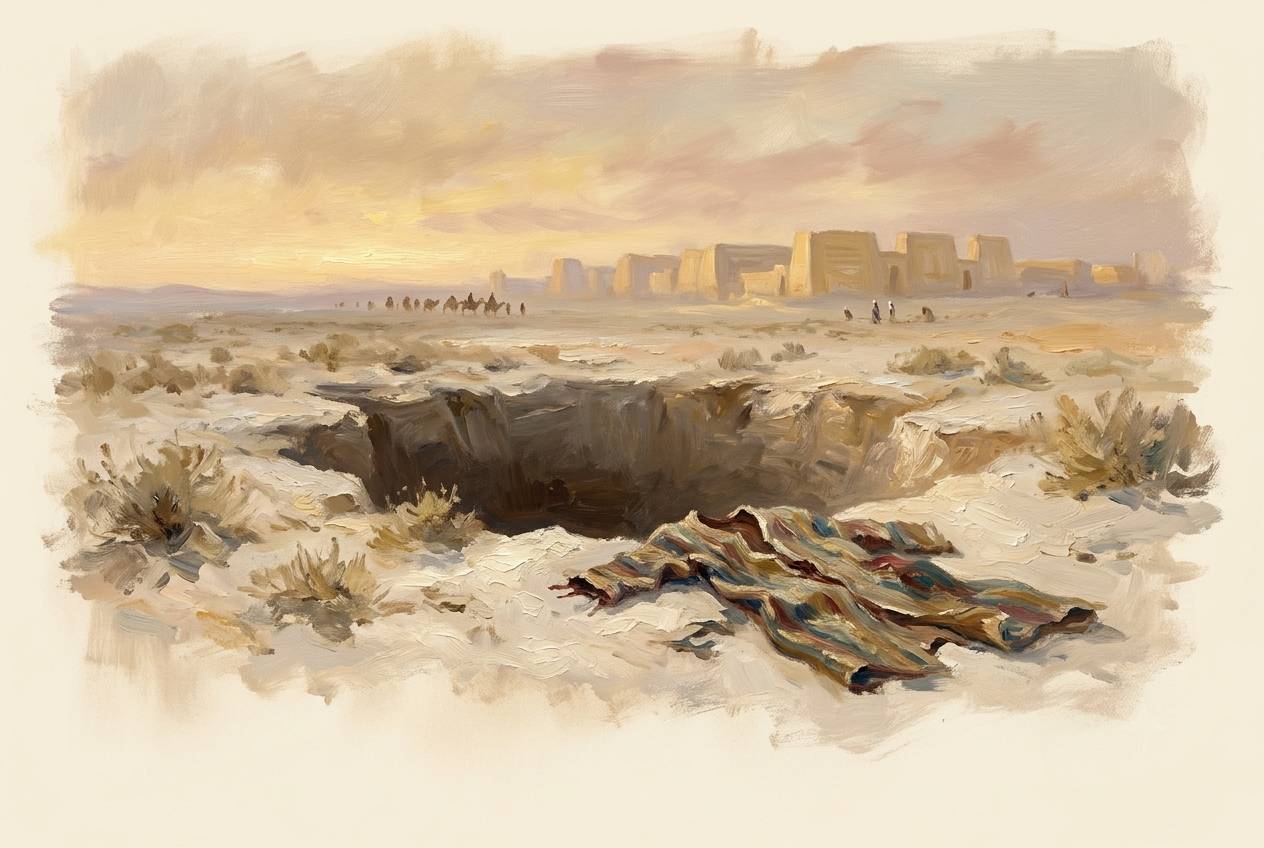
Joseph was his father’s favorite — which made his brothers hate him. He had dreams that suggested he would one day rule over them, and was naive enough to tell them about it, which made things worse. One day his father sent him to check on his brothers in the fields. They saw him coming from a distance and decided to kill him. They settled instead on throwing him into a pit and selling him to slave traders for twenty pieces of silver. Then they dipped his coat in goat’s blood and told their father he was dead.
He was seventeen years old.
In Egypt he was sold to a man named Potiphar, an officer of Pharaoh. He worked faithfully, earned trust, rose to running the entire household — and then Potiphar’s wife falsely accused him of assault when he refused her advances. He was thrown into prison for something he didn’t do. He had already lost his family, his freedom, his home. Now he lost the small dignity he had rebuilt.
In prison he interpreted dreams for two of Pharaoh’s officials. He asked the one whose dream meant release to remember him when he got out. The man forgot him for two years.
Betrayed by his brothers. Falsely accused. Imprisoned. Forgotten. Layer upon layer of being wronged by people who should have done better.
And then Pharaoh had a dream no one could interpret. The official who had forgotten Joseph finally remembered him. Joseph was brought from prison, interpreted the dream — seven years of plenty followed by seven years of famine — and was made second in command of all Egypt on the spot. He was thirty years old. Thirteen years after the pit.
When the famine came, his brothers traveled to Egypt for food. They stood before the most powerful man in Egypt and didn’t recognize their brother. Joseph recognized them immediately. He had every instrument of power available to him. He could have destroyed them.
He didn’t. He wept. He revealed himself. He said: “you intended to harm me, but God intended it for good.” Not a dismissal of the harm — an acknowledgment of it, and a larger frame around it. He provided for his brothers, moved his entire family to Egypt, and cared for his father’s household until Jacob died.
He didn’t pretend the wounds hadn’t happened. He held both things at once — the reality of what had been done to him, and the larger story God had been writing through it.
For you, reading this now
The people who hurt you most weren’t strangers. That’s what makes it so hard — it was someone who should have protected you, loved you, had your back. Joseph’s brothers threw him in a pit and sold him into slavery and let their father believe he was dead. He spent thirteen years in Egypt losing everything repeatedly — his freedom, his dignity, his name — because of what they did. And when he finally had the power to destroy them, he wept instead. Not because what they did wasn’t wrong. It was. He knew it. He named it: “you intended to harm me.” He didn’t minimize it or spiritualize it away. But he had seen something in the long arc of his story that gave him a frame bigger than the wound — “God intended it for good.” That’s not a fast conclusion. It took thirteen years of prison and betrayal and forgetting before Joseph could see it. You don’t have to be there yet. But Joseph’s story is a promise that the people who meant to harm you do not get to define who you are or what your life means.
This character speaks to people who feel…
Read it for yourself
The story: Genesis 37-50 — fourteen chapters, one of the most developed character arcs in the Old Testament.
A reading note: Joseph’s story is long but unusually readable — it flows like a novel rather than a list. If you want the full arc, plan an evening for it. If you don’t, the milestones below will give you the spine.
Where to start, if you only have ten minutes: Genesis 37 (the betrayal) and Genesis 45 (the reunion). Then Genesis 50:15-21 — the famous line and what surrounds it.
For going further: Genesis 39 — the false accusation and the prison. The middle of Joseph’s suffering, often skipped.