The Woman Caught in Adultery
Public shame, met with quiet restoration.
The story
She was brought in front of a crowd — though “brought” is a polite word for it. The Pharisees had caught her in the act of adultery and hauled her into the temple courts where Jesus was teaching. They made her stand in front of everyone. Then they put the question to Jesus — the law says stone her, what do you say?
She wasn’t a theological debate to them. She was a trap. A prop. Her shame was their leverage.
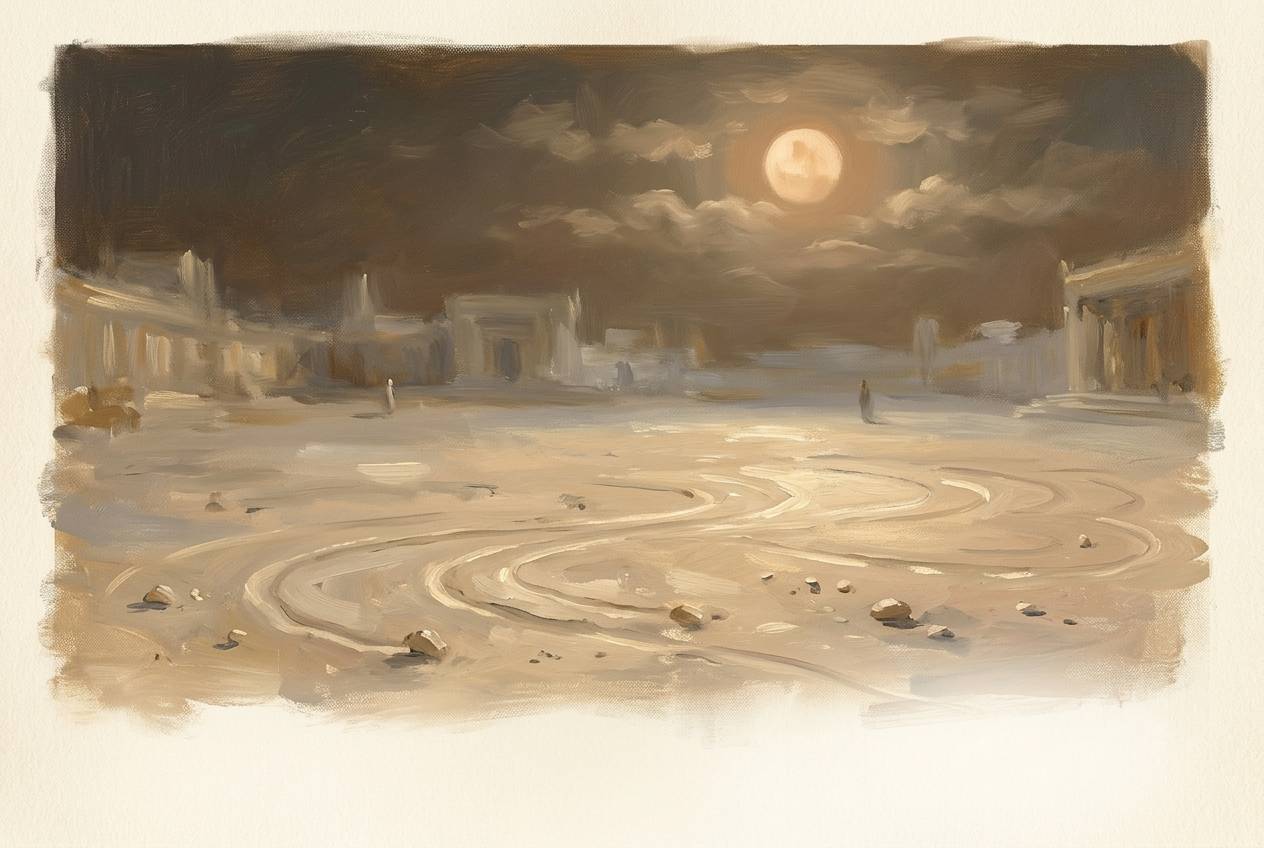
Jesus didn’t answer immediately. He knelt down and wrote something in the dirt with his finger. We don’t know what. The Pharisees kept pressing. He stood up and said: “let whoever is without sin cast the first stone.” Then knelt back down and kept writing.
One by one, starting with the oldest, they left. Until it was just her and Jesus.
He stood up and looked at her. “Where are your accusers? Has no one condemned you?” She said no one had. And Jesus said: “neither do I condemn you. Go and sin no more.”
No lecture. No list of her failures. No probationary period. No condition attached to the forgiveness beyond a simple direction forward. The crowd that had gathered to destroy her was gone, and the only one left with the authority to condemn her — didn’t.
The most public shame imaginable, met with the most quiet and complete restoration.
For you, reading this now
You know what it feels like to have your worst moment exposed — to have people look at you and see only what you’ve done wrong. The woman in this story was dragged in front of a crowd at her most vulnerable, used as a spectacle, waiting for the verdict. And Jesus — the one person in that crowd with the actual authority to condemn her — knelt in the dirt and waited for everyone else to leave. When it was just the two of them, He asked where her accusers were. They were gone. “Neither do I condemn you,” He said. No conditions. No probation. No reminder of everything she’d done. Just: you’re not condemned. Go forward. The crowd that gathered to destroy her had no power over what He said next. And the voices that gathered to condemn you don’t get the final word either.
This character speaks to people who feel…
Read it for yourself
The scene: John 8:1-11 — eleven verses. Read them slowly.
A reading note: Some Bibles include a footnote about this passage because of its complex manuscript history. The story has been treasured by Christians for nearly two thousand years and is included in every major modern translation. Don’t let the footnote distract you.