Peter
Failed publicly, restored quietly on a beach.
The story
Peter was the one who jumped out of the boat. Literally — when Jesus walked on water, Peter was the only disciple bold enough to ask to come out and meet him. For a moment he walked on water too. Then he looked at the waves, got scared, and sank. Jesus pulled him up and said “you of little faith, why did you doubt?” That’s Peter in a nutshell — enormous heart, enormous courage, and a recurring tendency to crash right at the critical moment.
When Jesus asked the Twelve who they said He was, it was Peter who declared it out loud: the Messiah. Jesus called him the rock the church would be built on. Hours later, in the same conversation, Jesus called him Satan for refusing to accept that the Messiah had to suffer. Up and down, bold and broken, all in one afternoon.
And then the night Jesus was arrested. Peter had sworn — loudly, passionately, in front of everyone — that he would never deny Jesus. That he would die first. That even if every other disciple ran, he wouldn’t. Then a servant girl recognized him by a fire in a courtyard, and Peter denied even knowing Jesus. Three times. The third time, a rooster crowed. Jesus turned and looked directly at Peter from across the courtyard. And Peter went outside and wept bitterly.
That moment of eye contact across the courtyard may be the most devastating scene in the Gospels.
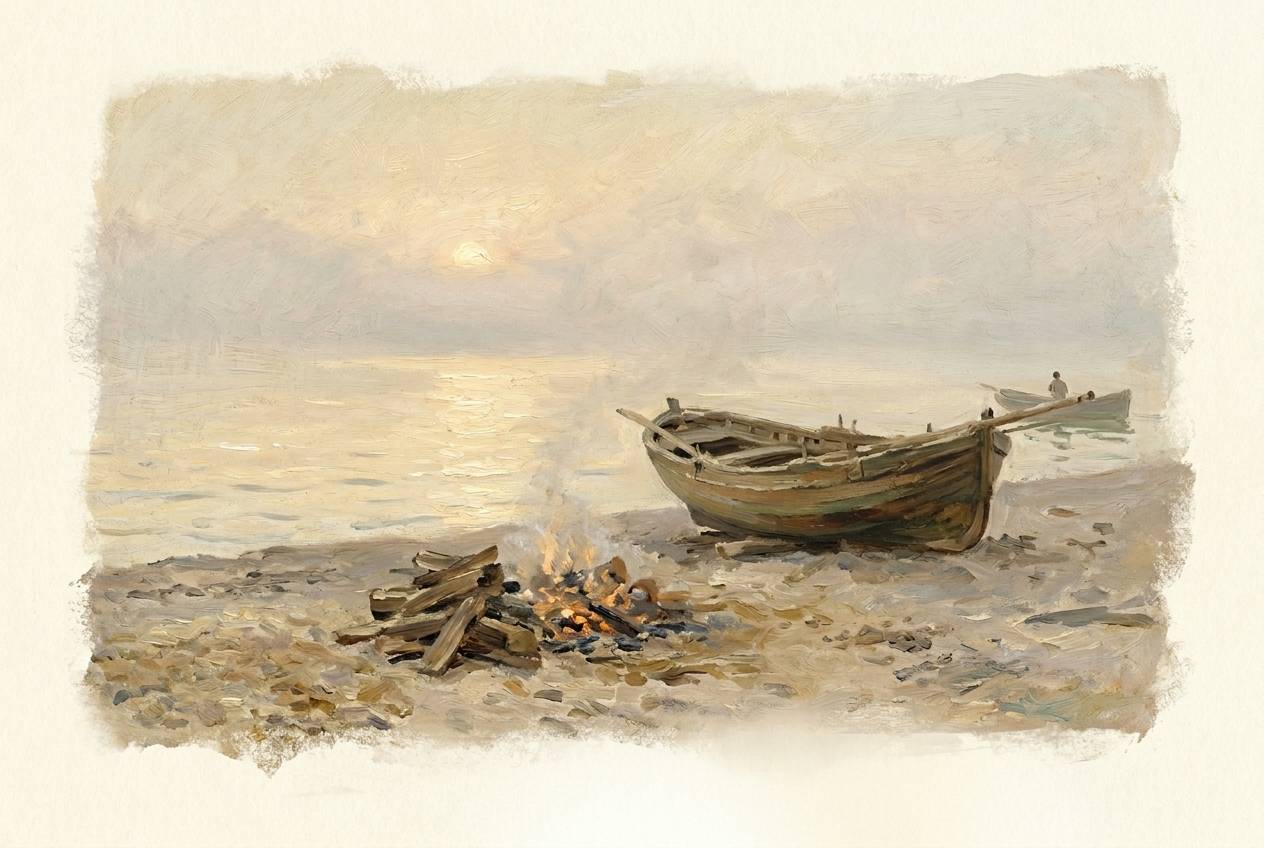
But it isn’t the end. After the resurrection, Jesus found Peter on the beach — back to fishing, back to his old life, probably convinced his failure had disqualified him forever. Jesus didn’t bring up the denial. He asked Peter three times: “do you love me?” Once for each denial. Not to punish him. To restore him. Each answer was a brick laid back in place. And then Jesus gave him his mission back, bigger than before: “feed my sheep.”
The man who failed most publicly became the leader of the early church.
For you, reading this now
You had good intentions. You meant what you said. And then when it mattered most, you fell apart — and now you can’t quite look at yourself the same way. Maybe everyone else is treating you fine but inside you’ve already decided what you are. Peter knew that feeling. He swore he would die before he denied Jesus, and then a servant girl by a fire scared him into doing it three times. When the rooster crowed and Jesus looked across the courtyard at him, Peter went outside and broke. After the resurrection he went back to fishing — back to his old life, probably convinced he had disqualified himself permanently.
Jesus found him there. On a beach. Made him breakfast. And then — gently, patiently, in front of the other disciples — asked him “do you love me?” Three times. Once for each denial. Not to humiliate him. To rebuild him. Each answer was a brick laid back in place. Peter wasn’t asked to prove himself, perform, or earn his way back. He was just asked if he loved Him. That was enough. And before the conversation was over Jesus had given him a mission bigger than the one he had failed at: “feed my sheep.”
Your failure is not what He sees when He looks at you. He’s already on the beach. Breakfast is already cooking. The question He has for you isn’t about what you did — it’s whether you’ll let yourself be loved through it.
This character speaks to people who feel…
Read it for yourself
The denial: Matthew 26:69-75 — the courtyard, the rooster, the look across the room.
The look: Luke 22:54-62 — Luke’s account records the moment Jesus turned and looked at Peter.
The restoration: John 21:1-19 — breakfast on the beach. Read this slowly.
Where to start, if you only have ten minutes: John 21. The restoration scene is the pastoral heart of Peter’s story.
For going further: Acts 2:14-41 — Peter preaches the sermon that launched the church, the same man who denied Jesus weeks earlier. And 1 Peter is the letter he wrote to suffering Christians decades later, full of hard-won pastoral wisdom about hope.