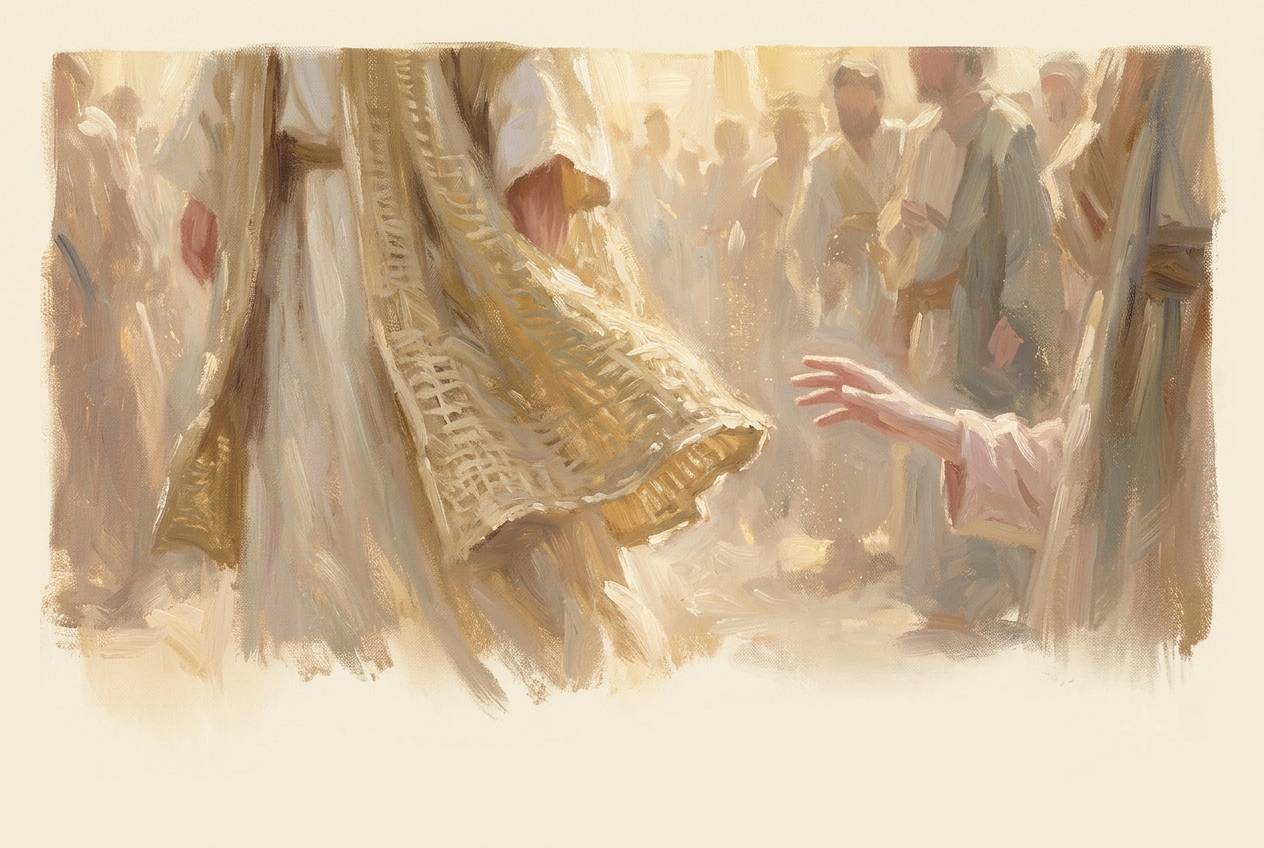
The Bleeding Woman
Twelve years invisible. Called daughter.
The story
She had been bleeding for twelve years. Under the religious law of her time that didn’t just mean chronic illness — it meant she was ceremonially unclean. She couldn’t worship in the temple. She couldn’t be touched without making the other person unclean too. She had spent every cent she had on doctors and gotten worse, not better. Twelve years of physical pain and twelve years of being untouchable. Twelve years of being a problem for everyone she came near.
When she heard Jesus was passing through, she didn’t approach Him directly. She couldn’t. By every rule of her society she had no right to. So she did the only thing she could think of — she slipped through the crowd and reached out a hand and touched the edge of His cloak. Just the hem. Anonymous. Hoping no one would notice.
She felt the healing immediately. And so did Jesus.
He stopped in the middle of a packed crowd and asked: “who touched me?” The disciples thought it was a strange question — the whole crowd was pressed up against Him. But Jesus knew something different had happened. And He kept looking.
This is the part of the story that matters most. Jesus had already healed her. He could have walked on. The miracle was complete. But He stopped and looked for her, because being healed in secret wasn’t enough. She had spent twelve years being invisible and untouchable, and Jesus refused to let her stay anonymous in this moment. He wanted her seen.
She came forward trembling and told Him everything. And He called her daughter — the only person in all the Gospels Jesus addresses with that word. “Daughter, your faith has healed you. Go in peace.”
She didn’t just leave with her body restored. She left with her name, her dignity, and a place in His family — spoken in front of everyone who had spent twelve years walking past her.
For you, reading this now
You’ve been invisible long enough that you’ve stopped expecting to be seen. Maybe you’ve learned to move through the world without being noticed — to take up as little space as possible, to need as little as possible. The woman in this story had been sick for twelve years. By the rules of her culture she was untouchable — she couldn’t worship, couldn’t be embraced, couldn’t even brush past someone in a crowd without making them unclean. When Jesus came by, she didn’t dare approach Him. She slipped through the crowd and touched the hem of His cloak hoping no one would notice. She was healed instantly. He could have walked on. Instead He stopped and looked for her, because He wasn’t going to let her stay anonymous in this. When she came forward trembling, He called her daughter — the only person in the Gospels He ever addressed that way. Not patient. Not stranger. Daughter. He sees you. And He’s not going to let you stay invisible either.
This character speaks to people who feel…
Read it for yourself
The healing: Mark 5:24-34 — Mark’s account is the most detailed.
Also told in: Luke 8:43-48 and Matthew 9:20-22 — both shorter.
Where to start: Mark’s version. Then notice in Mark that her story interrupts another miracle (Jesus was on his way to heal someone else). That interruption is the heart of why this story matters.